Note to the reader: All those words about amount to NADA, just watch this BBC video SILENCE THE NEWS
Friday, July 18, 2008
No News is Good News, BBC just plain shockingly silent and brilliant
Note to the reader: All those words about amount to NADA, just watch this BBC video SILENCE THE NEWS
Wednesday, July 16, 2008
In Search of Transparency
style="opacity:0.4;filter:alpha(opacity=40)" />
I plan on taking this further to understand, what is the opacity level we should strive to? Should opacity levels vary with differing external inputs? What taxonomy is ideal for differing level of opacity? so on and so forth.

Sunday, July 13, 2008
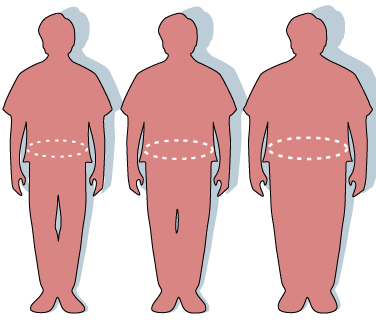
Mental Obesity
WARNING!! if you don't treat it on time it will KILL you.
We Americans are so used to excess that obesity is fairly commonplace amongst us. If you consciously watch, you will be surprised how conditioned we are to ignore obesity around us. of course this from the point of view of a non-obese person, which I truly can't lay claim to.
It is killing a lot of folks for sure, but we are unable to stop it at the roots. All indicators point to excessive consumption as the root cause of this deadly malady.
Excessive consumption if pervasive, eventually becomes a culture. So we have become an mentally obese nation. The next biggest product we will consume will therefore be none other than a plethora of mental fitness gadgets.
From a conversation with Daniel Casey on 07/12/2008
Friday, July 11, 2008
Why Barack's flip flop troubles me so when there are other important issues
As I try to sort this out logically, I see there could have been 3 outcomes:
a) He has been very busy and does not have time to look at the direct tweets his followers send him
b) He does not want to answer, does not care, particularly if it is a difficult question.
c) He only uses twitter (other social networks) as an advertising medium
The day I asked him the question, Jesse Jackson said things he should not have said in an open mike, that took news media by storm and completely overshadowed the FISA vote story. Perhaps Jesse and Obama wanted it that way. Either way it worked, there were some rumblings on NPR about the vote, but that was it.
What ever his reason for not answering my question, item c. got me thinking about the use of social media. What do people use social media for? Could it be as an advertising media for their products?. In this case Obama has around 40K plus followers, if he wanted to sell soap, all he has to do is say, ah..I showered this morning before making my speech at the chicago Police Academy..That Irish Spring Soap, gave me the boost I needed to change today. You get the picture.
Here I am thinking, wow politicians could use this media as a polling mechanism to find out how they should vote on the senate floor. Or wow, they can feel the burden of Joe Average as he struggles on that line to get an Iphone, after having spent $5 on gas to get to the store and so on.
But I think I am wrong. I dont think Obama will ever answer my question. After all why should he. He is just wants to win this election just like McCain does. So come January when I wake up in the morning and the MAP shows mostly red, like it did 4 years ago, I wont be surprised one bit.
Wednesday, July 09, 2008
What a guy. Why didnt I think of this when I turned 50

Here is his list of 8 things. Please copy this article as many times as you wish.
1. If you know someone who can’t afford to go out to lunch with your office group, slip them a $10 anonymously. Bring them into community. (If you don’t know someone, send something to the local rescue mission.)
2. If you know someone who is fighting cancer or Alzheimer’s or panic attacks or depression, sit with them, listen to them.
3. If you know someone who locked up for something they didn’t do–or even something they did–send them a note. If you can, visit them. Talk to them. The people I know who have been on “ankle bracelets” could use someone being kind.
4. There are people who go shopping at Goodwill and Salvation Army. They can’t afford more than the $2 for a pair of slacks. So pack a bag and drop it off.
5. Sometimes people get to demand your time (bosses in particular). Throw one of those people off-balance by offering to help on the next part of the project.
6. Shake hands with someone who no one else will touch. Or at least look them in the eye and talk to them.
7. Tell God that you can’t figure everything out yourself.
8. Find a little kid–a niece, a neighbor, your own–and listen for how they talk about what they believe. Listen to their trust.
That’s it. Do one of those things for me. Tell them Jon sent you.
(It will be easier to explain an internet friend than explain that Jesus said these things, too.)
Tuesday, July 08, 2008
Kindness without expecting return
A great place for kids to grow up, as it is wooded, Close to the Winchell Elementary school, Woods Lake and overall a nice place.
Around 8PM last night we had visitors. A couple, age range 30 to 40, white female, the male had a darker complexion, could be Hispanic or partly black. They told us they had just moved in to the neighborhood, and this bizarre story:
Their names were Rochelle and Edmund. They had bough the house at 2228 Waite ave this week. Rochelle had a C-section this week and the hospital would not let the kid go home with them. Rochelle claimed she was a nurse, but the hospital made here take CPR lessons. Rochelle's sister who was house sitting the other two kids, left for Indiana with the kids and the car broke down on the highway. The banks are closed and they really need some money for gas.
My wife did not bat an eyelid, asked them how much they needed. Edmund said $30 would do. She went it and got the money and gave it to them. The couple said they would return the money when the banks opened this morning.
After they left, we had this sense that we just got panhandled. So we checked the address Edmund gave us and that realized, he either made a mistake on the address or he did some falsification.
The point of the story goes to, human decency. How often are we kind without expecting anything in return? If you as a couple are walking from door to door looking for money, that cannot be good by any standards. Who are we to second guess and see through falsehoods or truths.
Sunday, July 06, 2008
Hammock in July
Friday, July 04, 2008
Collaborative Video Blogging
8 people go on a journey, a vacation of sorts. Age ranges, 10 through 60. Some place exotic. As all trips go, of course we take pictures because we want to remember our trip, our journey to that exotic place. So why not do it right.
What does a camera at a wedding table signify?. It is inexpensive and disposable, where the participants at the table take pictures during the event. A collaborative photo journal of sorts that gives us a better collage if you will of what transpired. It is a better collection of memories taken from exponentially higher number of angles, than that of what the hired Photographer can take physically take by himself. In fact it was one such Photographer who thought of this idea of collaborative Journaling using that disposable camera. The folks at the table have to ONLY point and click. The idea is simple, easy to implement and therefore adoption came easy to the point where every wedding does it today. Brilliant!! as the guiness guys would say.
Extend this idea to our 8 people that go on a journey to an exotic place and then take it further. As a rule when we go on vacations to an exotic place we carry our camera. We tend to have one designated photo journalist for the trip. This designate is akin to the hired Photographer who provided the disposable camera's at the Wedding. What if he or she came up with a way that could get every one to participate in the photo journaling process? But instead of being just photographs, what if our method of chronicling was to podcast or video cast the journey?.
Remember the rules for successful adoption. It has to be simple, inexpensive and easy to implement. Just like the disposable camera at the Wedding table. If we were a student of Collaboration and Knowledge management, this can be a fascinating project of fairly significant proportions. Why? because the days of us just taking static pictures while on vacations might become a thing of the past. This might become as disruptive to Vacations as the internet perhaps.
Collaboration needs good facilitators, for this project we need a good facilitators who are also good story tellers, good Knowledge management experts who can elicit good story telling from the rest of the group. And finally she needs to be an innovater to turn this into a "disposable camera at the wedding table" sort of an idea.
A good innovator's quest most often starts with research, more research and then some more research. Today, research is easy thanks to the many innovators that gave us the internet, search engines, data mining and folks who share content.
In a nutshell, I am looking to create a SIMPLE INEXPENSIVE TEMPLATE for folks who go on exotic vacations, to photo journal from different angles (like our innovative hired photographer at weddings) using good story telling and podcasting.
Off to Kenya next Summer, but before I go, I need to become a innovator, collaborator, KM expert, and Great Story teller!!.
Wednesday, July 02, 2008
Blogging with Consistency
1) Blog every day or blog on a specific frequency
2) Blog consistently about certain topics
3) Blog on a specific frequency about specific topics
4) just Blog
If you are building up a brand, I believe item3 would be the way to go. But we dont always blog to build a brand do we?.
I for one like to blog, staying line with the "Captains Log" approach. Remember Captain Kirk, oh what would we do with out his logs. But it is important to be consistent, and it is also important to Write, not just cut and paste. The writing part is good training. You will thank me for that 30 years later (notice the long tail theory cynicism there) I am sure.
So does this mean I am not consistent? or will not be consistent?. For a fact the content I blog about will be free for you to use and reuse. It also will bring some value to you is my hope.
Saturday, June 28, 2008
My Brush with Greatness today.
So it came to be that we set off in his Prius down Oakland Ave, to the K college campus where 50 odd years ago he had a part time job as the night watchman for these wonderful tennis courts and learned to play the game and kept playing all his life.

We first took a tour of the campus and then settled down to the far courts. Les walked me through the warm up routine, where you touch the intersection of all the white lines, running forward and backward along all the lines. We then settled down to holding the racket. I learned how to hold the racket for the forehand and backhand strokes and about the two types of follow through for the serve.
These courts have seen most of the great players, as you can see from the list of winners here . So needless to say, after two hours I came away with a feeling of having brushed with greatness.
Les my neighbor by the way played Rod Laver and beat him in an exhibition match back in the 50's. So I was one degree removed from greatness today
Friday, June 27, 2008
TEDS Top 10, I dont agree with quite a few, but does not mean these are not good.
Top 10 TEDTalks of all time
1. Jill Bolte Taylor: "My stroke of insight"
2. Jeff Han: "Touchscreen demo foreshadows the iPhone"
3. David Gallo: "Underwater astonishments"
4. Blaise Aguera y Arcas: "Jaw-dropping Photosynth demo"
5. Arthur Benjamin: "Lightning calculation and other 'Mathemagic'"
6. Sir Ken Robinson: "Do schools kill creativity?"
7. Hans Rosling: "The best stats you've ever seen"
8. Tony Robbins: "Why we do what we do, and how we can do it better"
9. Al Gore: "15 ways to avert a climate crisis"
10. Johnny Lee: "Creating tech marvels out of a $40 Wii Remote"
Tuesday, June 24, 2008
on George Carlin and Vuja De.
We all know déjà vu—looking at an unfamiliar situation and feeling
like you’ve been there before. But what's valuable to innovation is
vuja dé—looking at a familiar situation with fresh eyes, as if you’ve
never seen it before, and with those fresh eyes developing a new line
of sight into the future.
Let's face it: Most companies in most industries have a kind of
tunnel vision. They chase the same opportunities that everyone else is
chasing, they miss the same opportunities that everyone else is
missing. It’s the companies that see a different game that win big. The
most important question for innovators today is: What do you see that
the competition doesn't see?
Om Malik sent this link out on twitter which is truly priceless for the the video of Carlin's standup.
http://station.newteevee.com/show/george-carlin/
Monday, June 23, 2008
Are you fit to join the club.
1) Are you related
2) Are you cool
Since the email arrived this morning there has been a lot of mental chatter going on on how best to answer this. The first question, is a slam dunk, but the one on coolness, has me thrown for a loopty loop. Am I Cool?. Have I ever been Cool?. It should be a simple Yes or No, but why am I struggling with an answer?.
My 12 year old son is into being cool these days, and it manifests in many different ways. During the winter when there is a lot of snow on the ground, he would rather not wear snow pants because it would make him look less cool. He does not really mind being cold and wet in sub-zero tempratures.
Who decides on how cool one is?. I think I know the answer. Coolness should be the STATE of being where one is comfortable in any situation.
I am not, there fore, I will have to forgo joining the club for now!! Till then.........
Sunday, June 15, 2008
To Blog or Not to Blog
For a while now there has been the rumbling of Social Media and Social Networking. Last year we saw VzConnect (internal to Verizon) and indication form the pundits out there, is that Social Media/Networks is one of the top 4 technologies for the coming years.
Rachel Happe is an analyst from IDG and wrote this article, excerpt below (http://www.thesocialorganization.com/2008/06/executive-blogs-dont-need-to-be-difficult.html )
When I meet with executives I often ask if they blog and the answer is often no - followed by a variety of reasons, some valid, some questionable. But one thing is often true: blogging can take a lot of time. Some executives get around this by having someone in their communications group write their blog posts. Not really ideal and probably less than authentic.
Jeff Schick - IBM's VP of Social Computing - has come up with an ingenious solution. He blogs internally to his team but his posts are simply his daily schedule (most of it anyway) followed by a couple of lines about his impression of the meetings or the outcomes. This gets him out of the endless cycle of "What am I going to write about today" and gives his team some interesting reading.
I like this approach for two reasons: One - what a great tacit training tool. Ambitious employees who want to move up have a great way of seeing what an executive really does all day and of understanding what they might want to start paying attention to within the company. Two - large teams often rarely see their executives and have no idea what they are doing until they show up, ask some questions, and go away again. That can lead to a lot of speculation and even resentment if employees feel like they can't get the attention they need to solve problems. Jeff admitted that since he started publishing his schedule publicly he actually now gets sympathy from many people on his team. That sympathy helps a lot when you've got to turn around and ask the team to do something hard.
Wednesday, June 11, 2008
Current Security Trends for the Enterprise.
What are the Biggest risks for Windows - Worms, Viruses or Social Engineering?. What should be the recommended approach for Vulnerability management?.
Introduction
Information collated in this post comes from Gartner, Forrester, Internet Searches for "Enterprise threats" and personal observation. Here is a Short answer to the question: If vulnerability/patch management is Operationalized (automated anti-virus and patching), Worms and Viruses will be contained to a great extent, which leaves Social engineering and threats from Within as the biggest risk.
Gartner identified 3 Key Issues on Infrastructure protection in a publication by Mark Nicolete in March 2008 [1
Nearly Every day, new vulnerabilities are reported, but Microsoft and partner vendors patch most security holes before an actual attack occurs (A few years ago, a worm would propagate faster than the information about the worm, Not so today). The biggest risk to enterprises comes from targeted attacks, many of which are from insiders. In addition, phishing and identity theft attacks have caused the rise of "credentialed" attacks. Loss of sensitive data owing to lack of encryption on laptop computers and from Tape backup vendors is another source as we have seen recently. As attackers increasingly move "up the stack" to applications and users, signature-based solutions become increasingly ineffective. [2
Security purchases were once driven by fear, especially antivirus and intrusion detection systems. Individual solutions were bought to solve individual problems. Now, purchases are more focused on the fulfillment of policy (SOX, HIPPA, PCI) and have a more-holistic view of the organization's security issues [3
From a Forrester survey of 252 Enterprises on what was driving Network upgrades, Security and Business continuity profiled as Number 1 and Number 3 drivers. Sarbanes-Oxley, the Health Insurance Portability and Accountability Act of 1996 (HIPAA), the Personal Information Protection and Electronic Documents Act (PIPEDA), and various European Union (EU) directives are just a handful of regulatory pressures that have network managers scrambling to deploy better access control and data protection. Moreover, companies also need to make sure the network is able to resist common threats from viruses, worms, and other malicious code. [5
Conclusion:
Are there any Windows Specific threats and mitigations to watch for?
What are the "biggest Software risks that a windows platform faces and what are the recommendations to mitigate these threats": Outlook (mail), IE (Browser) and IIS (Webserver) - are the worst offenders from a historical perspective. [6 <http://windowsitpro.com/articles/print.cfm?articleid=9084> ] . Mitigation of these threats can be accomplished by robust monitoring tools, monitoring logs for suspicious activity, services for availability, file systems and Registry for integrity and unauthorized changes, and network packets for suspicious traffic. Threats to the enterprise are evolving and changing over time. Our security policies should be reviewed often to make sure we are keeping pace with the new drivers. Configuration management which encompasses automated Vulnerabiltiy and patch management should be operationalized as far as possible, to free up valuable resources to combat the ever changing threats to the enterprise. If vulnerability/patch management is Operationalized (automated anti-virus and patching), Worms and Viruses will be contained, which leaves Social engineering and threats from Within as the biggest risk to focus on.
Saturday, June 07, 2008
Social Media Interaction: Four Buckets
Skill+Cycles Bucket = Skycles Bucket
- members of the community advertise their skills and cycles available
- members of the community advertise their needs
- algorithm matches Needs to Skills and dump it into the solutions bucket
- Solutions bucket, every one is happy
Thursday, June 05, 2008
Smart folks leveraging Social Media networks for Upscale Customer Service
The other end of the spectrum, I needed some Server power consumption data. Most of my research using google and similar search tools, generated a lot of noise, but nothing precise. I posted a request on Twitter. I got an answer in about 20 min. Sort of a global IRC. How cool is that?.
Here is a pull model for customer service: Search for all the complaints against your company's brand, and on various social networks, compile it and try to find the answer. You will make a lot of customers happy. Your Sr. Management will be happier.
Update to this Story:
I am starting to pay more attention to this trend. I noticed verizon on facebook, so is ATT and few others.
http://www.facebook.com/verizon
http://www.facebook.com/pages/ATT/6114253084?ref=s
http://www.facebook.com/pages/Intel/8602499645?ref=s
Interstingly Verizon has 18000 fans while ATT and Intel are in the hundreds.
Smart folks leveraging Social Media networks for Upscale Customer Service
The other end of the spectrum, I needed some Server power consumption data. Most of my research using google and similar search tools, generated a lot of noise, but nothing precise. I posted a request on Twitter. I got an answer in about 20 min. Sort of a global IRC. How cool is that?.
Here is a pull model for customer service: Search for all the complaints against your company's brand, and on various social networks, compile it and try to find the answer. You will make a lot of customers happy. Your Sr. Management will be happier.
Sunday, June 01, 2008
IS 456 Class IX and X, The End
We had two lectures combined into one this week, owing to some logistical issues. So this will be the last lecture. The theme for today covered: BPM, Barriers of implementation, Metrics for KM and Culture
1) Business process modelling
We defined what a process is and leveraged Swim lane diagrams to model activities to root out inefficiencies. Validation should be automated to eliminate inefficiencies where possible. hand offs is an area that can be scrutinized to improve the process. Duplication of effort is an area of inefficiency by people or by machines. Work that can be done by machines, being done by people, like validation, is a good source of unnecessary effort. Any time task is done by more than one person is a good place to analyze for improvement. Finally always make the modelling diagram easy to understand.
2) Barriers of implementation
Managers overlook four common issues that concern employees."
- Being known as an expert
- A mechanism for encouraging/motivating knowledge sharing behavior
- Track usage, contributions by employees
- Collect statistics on which documents are accessed, and whether the document was perceived as relevant or useful.
- Reward those employees whose documents are rated as most valuable.
- Problems:
- Being touted as the expert means more work. (?)
- Being touted as the expert stifles one's career. (?)
- Requisite knowledge too hard to capture and categorize
- We've seen this before...
- Problems/Raising the level of abstraction/The bottom line:
- Does the cost of capturing insight outweigh the perceived benefits?
- Can the contextual factors influencing the knowledge be captured?
- Is a telephone or email address a better solution?
- Lack of adequate communication and action
- Are employees, by and large, leaders or followers?
- Whom do they follow?
- Problems:
- Confusion about what the behavior is supposed to be
- Negativity surrounding "appropriate" behavior
- Again, what motivates people?
- Forcing it
- Now, imagine you are the senior manager.
- The last point just said to lead, lead, lead.
- This one says "Do not overmanage or micromanage".
- What are you supposed to do, exactly?
- Problems:
- Is it as simple as 'hire good people, and get out of their way'?
- Employees prefer their peers telling them to do something rather than a senior executive.
3) Metrics


4) Culture
Culture and Climate fall in the same category but are different. Climate is short term, like before a layoff or during a merger. Culture is long term and require multiple CEO's tenure to see a change.
Parting Shot: Dont waste your time trying to Change the Culture, it is a waste time!!!
No final parting shot is complete without the audience knowing what was learned int he 11 week process, so here goes:
Most of what I have learned in class falls under the following themes
- Collaboration
Knowledge management systems
Personal Knowledge Management
Problem solving and decision making in in organizations
KM Technologies
Knowledge elicitation - Organizational learning and knowledge transfer
The blogging exercise in class has the potential to help me hone my writing skills that will come in handy as I work on my PhD dissertation.
The Wiki collaboration tool, while cumbersome (sharepoint versus media wiki) provides insight into collaborative writing skills.
The best bang for the buck, I got from class is my exposure to twitter and related tools that let you follow conversations of selected genre. I have been able to gain a lot of insight into KM and related technologies by following conversations in twitter and friendfeed and Google Reader. I highly recommend, a feed based approach in augmenting ones reading on specific subjects and microblogging to follow current trends through conversations.
Adieu!! So long!! Farewell!!